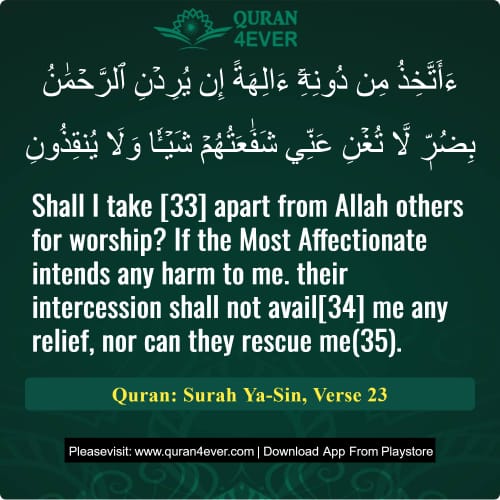
Transliteration:( 'A-attakhizu min dooniheee aalihatan iny-yuridnir Rahmaanu bidurril-laa tughni 'annee shafaa 'atuhum shai 'anw-wa laa yunqizoon )
"Shall I take [33] apart from Allah others for worship? If the Most Affectionate intends any harm to me, their intercession shall not avail [34] me any relief, nor can they rescue me [35]."
Habeeb ibn Najjaar questions the logic of turning to others besides Allah. His words reveal that the people of Antakiyah were polytheists, relying on false deities and idols for protection and blessings. This rhetorical question exposes the futility of their belief system.
He explains that if Allah wills harm, these false gods cannot intercede or lessen the punishment in any way. This clarifies a key belief: only those whom Allah allows can intercede, such as Prophets and righteous servants. Intercession without permission—as claimed by idolaters—is rejected outright and is a form of disbelief.
Not only can these false deities not intercede, but they also lack any power to save or defend. The verse negates both coercive power and intercession for idols. In contrast, true intercession—as granted to the pious—exists, but only by Allah’s will, not through force or entitlement.
This verse provides clear reasoning against shirk (polytheism) and affirms the true understanding of intercession in Islam.
The tafsir of Surah Yaseen verse 23 by Ibn Kathir is unavailable here.
Please refer to Surah Yaseen ayat 20 which provides the complete commentary from verse 20 through 25.
(36:23) What! Shall I take any deities apart from Him whose intercession will not avail me the least were the Merciful One to bring any adversity upon me, nor will they be able to rescue me?[19]
19. That is, they are neither such favorites of God that even if I commit grave crimes, He will forgive me on their recommendation, nor are they so powerful that they should be able to rescue me if God may please to punish me.
For a faster and smoother experience,
install our mobile app now.
Related Ayat(Verses)/Topics